
Thought for Today
Did Scotland axe 14 million trees to make way for wind farms.
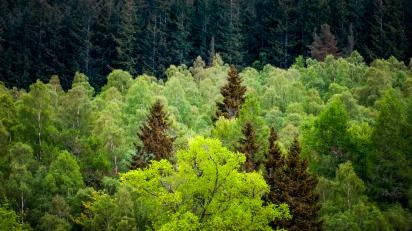
In recent days, hundreds of social media posts have alleged that 14 million trees were chopped down in Scotland to make way for wind farms. “Environmental madness”, one widely shared tweet reads. “Scotland launched a number of wind turbine projects in an obsessive quest to cash in on renewables.
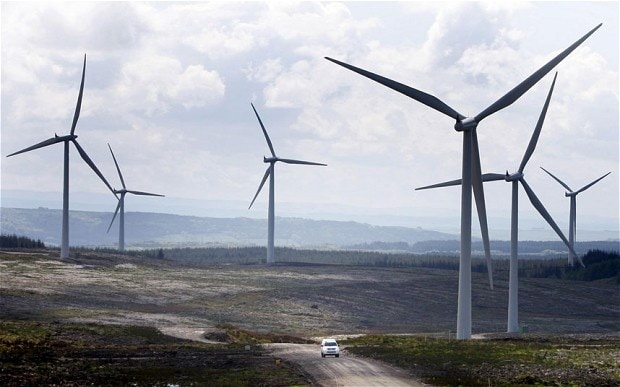
“The real tragedy is the destruction of 14 million trees, the mind-numbing hypocrisy of climate zealots, a hoax created by the UN.” Other posts, meanwhile, suggest the 14 million trees had been cut down “since 2020”.

But that’s not the full story.
According to the government agency Forestry and Land Scotland (FLS), 14 million trees were cut down to make way for wind farms in Scotland, but this had occurred over 20 years.
Meanwhile, over the same period (from 2000), 272 million trees were planted across the country.
That crucial fact is missing from an article published by the website Energy News Beat, which appears to have driven the recent surge in social media activity.
Notably, the omission comes despite the article drawing heavily on a two-year-old story published by Scottish news site The Herald, in which an FLS spokesman was quoted as saying: “That figure for felled trees should also be contrasted with that for the number of trees planted in Scotland over the years 2000 – 2019, a total of 272,000,000, and renewable energy developments fit well with this.”
He added: “The amount of woodland removed across Scotland’s national forests and land, managed by FLS, for wind farm development is not even 1 per cent of the total woodland area”, while the 14 million trees were a commercial crop that would ultimately have been felled for timber.
An FLS spokesman also explained that the 272 million trees planted did not include restock planting on commercial sites. In addition, the Scottish government requires that developers that fell trees to make way for wind farms must carry out compensatory planting elsewhere.
“On average, FLS will plant 25 million trees every year as restock planting of commercial crops,” he said.
So you have it and the debates continue to follow.
COP26 attendees, including Scotland, swore to end deforestation by 2030.
Scotland and all other attendees at the recent COP26 gathering agreed to stop all deforestation efforts by the year 2030. Scotland apparently took this to mean that for the next seven some-odd years, clearcutting entire forests is an acceptable way to “cool” the planet.
“Renewable energy and forests are key to Scotland’s contribution to mitigating climate change and FLS is successfully managing both elements,” claims Forestry and Land Scotland about the issue.
What the FLS spokesman who made these statements failed to address is the fact that once the 21 new wind turbines are erected on the clearcut land, there will be no more room to reforest the area – meaning fewer trees on the Scottish landscape.
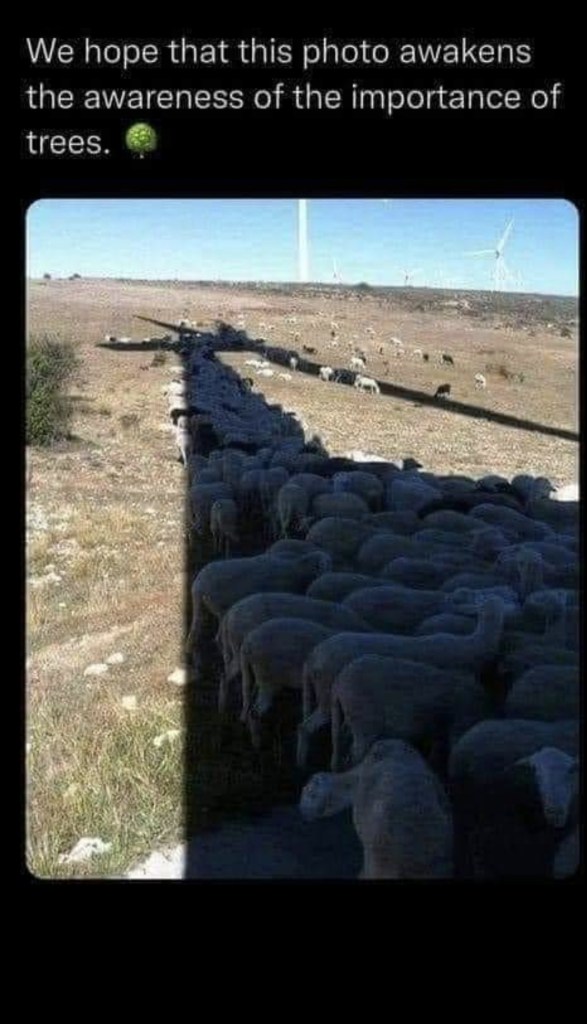
Back in 2018, some 6,500 acres of woodland were cleared to make way for wind turbines, prompting accusations that the Scottish forestry chief had “desecrated” the land.
What was previously an unspoiled countryside saw total destruction to make way for just seven wind farms, which are highly unreliable, unsightly, noisy and just plain hideous.
Less than half of that land has been replanted or even earmarked for replanting, despite promises from FLS that everything would be made “green” again once the gargantuan metal monstrosities were installed.
“This has been happening in other parts of Europe for some time,” warned Dr. Benny Peiser, head of the Global Warming Policy Foundation think-tank, concerning the spreading virus of so-called “green” energy.
“People in Scotland are not as aware of it because the forestry is not close to population centres,” he added. “Many of these forms of renewable energy have far greater impact on the environment than simply building a power plant.”
“By building wind farms, they are destroying huge areas of forestry for very little effect and are desecrating large parts of beautiful countryside, which can only damage Scotland as a tourism destination.”
Between 2014 and 2016 in Scotland alone, some ten square miles of forests were clearcut for wind farm developments. What was once an unspoiled bastion of beauty and nature is now a rattling metal wasteland that is supposedly “saving the planet.”
“Nothing more than a scheme, exchanging one green (earth) for another green (cash), and that is all it is about,” wrote a commenter at Natural News about the subject.
Reference ~https://energysupply.news/2022-08-15-scotland-cuts-down-14million-trees-wind-farms.html
This 16 km elevated stretch through Pench Tiger Reserve is India’s first and largest road stretch. This road allows unrestricted movement of animals even as commuters, including tourists, drive along the 16-km elevated stretch on the corridor connecting Delhi, Ganeshpur-Mohand in Uttar Pradesh’s Saharanpur district, and Dehradun.

The elevator corridor runs along National Highway 72A for a 28km stretch situated between the Shivalik forest range that is home to several species of wildlife, including elephants. According to officials, the 16 km elevated highway is the country’s first such road passing through forest areas. Notably, the Rajaji Tiger Reserve sits on one side of the forest.
According to a study by Wildlife Institute of India, usage of these underpasses by tigers has increased by 127%.

1.38 billion people are travelling in India on roads by any mean, not just vehicles using fuel (camels, cycles, carts, walking etc). India is a country that needs roads to survive.
Features of the Elevated Stretches


Ask Permission:
Before cutting the branch of a tree or removing a flower, tell the spirit of the tree or plant what you are going to do, so that they can withdraw their energy from that place and not feel the cut so strong.
When you go to nature and want to take a stone that was in the river, ask the river keeper if he allows you to take one of his sacred stones.
If you have to climb a mountain or make a pilgrimage through the jungle, ask permission from the spirits and guardians of the place. It is very important that you communicate even if you do not feel, do not listen or do not see. Enter with respect to each place, since Nature listens to you, sees you and feels you.
Every movement you make in the microcosm generates a great impact on the macrocosm.
When you approach an animal, give thanks for the medicine it has for you.
Honour life in its many forms and be aware that each being is fulfilling its purpose, nothing was created to fill spaces, everything and everyone is here remembering our mission, remembering who we are and awakening from the sacred dream to return home.
Getting To The Root; http://www.gettingtotheroot.org/
Artist: Vinod Rams


“FOOD IS A WEAPON. WHEN YOU CONTROL SEED YOU CONTROL LIFE ON EARTH.”
Vandana Shiva, a world-renowned environmental thinker, activist, feminist, philosopher of science, writer and science policy advocate, is the founder of Navdanya Research Foundation for Science, Technology and Ecology in India and President of Navdanya International.
Trained as a Physicist at the University of Punjab, she completed her Ph.D. on the ‘Hidden Variables and Non-locality in Quantum Theory’ from the University of Western Ontario, Canada. She later shifted to inter-disciplinary research in science, technology and environmental policy, which she carried out at the Indian Institute of Science and the Indian Institute of Management in Bangalore, India.
In 1982 she founded the Research Foundation for Science, Technology and Ecology (RFSTE), an independent research institute that addresses the most significant problems of ecology of our times, and two years later, Navdanya (‘nine seeds’) the movement in defense of biodiversity and the contributions made to the climate, environment and society by small farmers.
The recipient of many awards, including the Right Livelihood Award, (the ‘Alternative Nobel Prize’) and the Sydney Peace Prize, she has been named among the top five “Most Important People in Asia” by AsiaWeek.
She is a prolific writer and author of numerous books and serves on the board of the International Forum on Globalization, and member of the executive committee of the World Future Council.

The Sheriff of Nottingham has a theory that The Major Oak is a Trysting Tree?
The shape and size of the Major Oak indicates that it has for most of its life stood in a clearing uncrowded by other trees close by. It could have been at a crossroads for local paths. This might have made it a Trusting Tree.
Trysting trees are trees which, because of their individual prominence, appearance, or position, been chosen as meeting places. A ‘tryst’ is a time and a place for a meeting, especially of lovers. The word tryst shares it’s original with the words true and trust.

In a medieval forest like Sherwood (before GPS and sat nav) trysting trees could have acted as essential markers and as perfect locations for secret rendezvous between trusted locals and outlaws.
“A Gest of Robyn Hode” is one of the earliest surviving texts of the Robin Hood tales. The Gest (which meant tale or adventure) is a compilation of various Robin Hood tales, arranged as a sequence of adventures involving the yeoman outlaws Robin Hood and Little John, the poor knight Sir Richard at the Lee, the greedy abbot of St Mary’s Abbey, the villainous Sheriff of Nottingham, and King Edward of England. In it there is a reference to a trstell-tree.
Broke it well,” sayd Robyn,
“Thou gentyll knyght so fre,
And welcome be thou, gentyll knyght,
Under my trystell-tre.

The Major Oak is one of the biggest oak tree in Britain and we won’t discuss how old it might be (something from 800 – 1200 hundred years old ?? Who knows?) The world-famous tree weighs an estimated 23 tonnes, has a girth of 11.14 metres (36 and a half feet) and boasts an impressive canopy that reaches a whopping 28 metres (92ft).
Its height is in the region of (a mere) 52 feet (16m), that means it’s almost twice as broad as it’s tall. The Major Oak is a magnificent tree but she is not tall and is certainly very broad. This shape, where the tree has been able to grow out rather than up could mean that the Major Oak has for most of its life been in a clearing in the forest. Perhaps a cross roads of paths which gave the tree chance to spread out. It’s always stood a little a part?

The Sheriff was the chief agent of the crown in every county for hundreds of years and a vital part of royal government. He was the head of the fiscal, judicial, administrative, and military organisation of the shire and was a direct appointment of the crown.

All the legends of Robin Hood refer to The Sheriff of Nottingham in fact our Sheriff was Sheriff of Nottinghamshire and Derbyshire. Only from 1567 were Sheriffs for Nottinghamshire and Derbyshire appointed separately.


The iconic statue of Robin Hood stands in the former moat of Nottingham Castle. Cast in bronze and weighing half a ton, the figure is 7ft tall, Robin is literally larger than life!
Robin Hood stands outside Nottingham Castle, the point of his arrow aimed at the gatehouse.
References ~ The Sheriff of Nottingham facebook page.

Something happened last week that made me rather sad. The 600-year-old Bretton Oak, near Peterborough, one of the last survivors of Grimeshaw Woods, an ancient forest that once covered much of that part of the world, was felled after final desperate attempts to save it failed.
This ancient tree, which had stood since the reign of Henry VI, was ripped apart by men with hi-vis jackets and chainsaws in a matter of minutes, to the horror of many locals. Its crime? The roots were allegedly causing ‘structural damage’ to nearby housing. Although, as one resident pointed out, that case was debatable.
No matter. Insurance companies were refusing to underwrite the affected properties, and so the man from the council decreed that the oak had to go. Six centuries of history, a living organism that had outlasted kings, queens, plagues, war and famine, felled by petty bureaucracy.
Oh, it’s just an old tree, I hear you say. And yes, it is – or was. But the thing about ancient trees is that they are not just old, knarly bits of wood. They are a living connection to the past. Their bark bears the marks of many generations. Their roots and branches mark the passing of the decades.
They are, in many cases, astonishingly beautiful, living sculptures in our green and pleasant land. And unlike humans, they ask very little from their environment. Indeed, if anything they enrich it: the soil, the air, the countless generations of animals and insects that live among their leaves.
I must confess, I’ve always had a thing about trees, ever since I was a child. My favourite children’s book was Enid Blyton’s The Faraway Tree, about a series of revolving worlds at the top of a magical tree in an enchanted wood. When my father read me The Lord Of The Rings, I fell in love with Treebeard, last of the mighty Ents, described by Gandalf as ‘the oldest living thing that still walks beneath the Sun upon this Middle-earth’.
In middle age, as life has presented its challenges, trees have once again become my escape. When it all gets too much, I get in my car and I go ancient tree-hunting. I seek them out – by rivers, in fields, in churchyards – and I spend time with them.
This may sound batty, and maybe it is, but they bring me great comfort and solace.
They are like old souls, wise and gentle, a reminder that, good or bad, everything passes – and ultimately, nothing really matters, certainly not success or money or whether the barista makes your flat white just so.
Some reside in splendour in National Trust glory, tended to by expert horticulturists, others grow wild in the most unlikely of places – in people’s gardens, by the side of roads, in the corners of fields.
Last week, the Woodland Trust published research indicating that there are between 1.7 and 2.1 million trees of ‘great age’ across Britain, only about 115,000 of which have been recorded.
Like the poor old Bretton Oak, very few have any legal protection, although some – such as the Major Oak in Sherwood Forest (around 1,000 years old) and Big Belly in Savernake Forest (which would have been an acorn around 1066) – are famous enough to be immune from the attentions of town planners.
Everyone loves an oak, of course, but there are many others.
Some, such as birches, are defined as ancient once they get to the age of mere 150. Yews, on the other hand, are practically classified as teenagers until around the age of 800. Some in this country are thought to date back to the Bronze Age. One of my favourites is the Defynnog Yew, which lives in a unprepossessing churchyard in the Brecon Beacons. As wide as it is tall, it is so old the trunk has split, so now it looks like two trees – but it is in fact one.
Climb inside the belly of this gentle giant, as I have done, and you will feel a stillness and a peace like no other. If I could choose anywhere to draw my last breath, it would be in the soft caress of its mossy woodiness. There is a reason so many churches are built where these extraordinary trees grow: there is something deeply spiritual about them.
Why do we protect our ancient buildings and not our trees? Why are we so arrogant as to think bricks and mortar matter more than a creature that was alive when we were still grubbing in the dust?
Our ancient trees are part of our culture and history. We should honour them for the giants they are.
Reference ~ Sarah Vine, 2/7/22 Daily Mail
England’s 2million ancient trees should be given heritage status like Buckingham Palace and the Old Bailey because they are ‘cathedrals of the natural world’, conservationists say.
Ancient trees in England should have the same protection status as old buildings, conservationists say, after research suggested there could be millions of unrecorded ‘cathedrals of the natural world’.
Experts from the University of Nottingham estimated that there could be between 1.7 and 2.1 million ancient trees across the country — ten times as many as currently on official records.
The Woodland Trust is now rallying for these trees to receive the same heritage status as some of the nation’s favourite buildings, including Buckingham Palace and the Old Bailey.
Adam Cormack, head of campaigning at the conservation charity, said: ‘These astonishing trees are our inheritance from history, and we should be treating them like national treasures.
‘We are petitioning governments across the UK for better protection for our most ancient and important trees and to do more to support people who are looking after them.’

Ancient and veteran trees currently have no automatic right of protection in the UK, and it is difficult for organisations to know exactly how many are at risk. Pictured is the world-famous 1,000-year-old Major Oak tree in Sherwood Forest, Nottingham


He called them the ‘cathedrals of the natural world’, before adding: ‘These huge stalwarts have taken centuries to grow and their loss would just be devastating, not only for the landscape, but for the environment.
‘These trees are vital havens for wildlife and huge carbon stores.
‘These living legends don’t have the automatic legal protection that most of our wildlife and old buildings have.
‘This is despite the fact some are more than 1,000 years old.’
An ancient tree is defined as showing exceptional age in relation to other trees of the same species, and may have historical or cultural value.
An oak tree is classified as ancient when it reaches 400 years of age, and is considered a veteran tree at 150.
However, Birch trees grow very quickly and reach ancient status at 150 years old, while Yews are not deemed ancient until they are about 800.
Most ancient and veteran trees display similar features such as a hollowing trunk, dead wood in the canopy or the presence of other organisms such as fungi or plants on its structure.
Veteran trees share similar features and values to ancient trees, but they may not be old enough to be considered truly ancient for their species


The Cubbington Pear tree, a 250-year-old pear tree near Leamington Spa, was felled to make way for HS2 in 2020.
Parts of Jones’ Hill Wood in Buckinghamshire, an ancient woodland that inspired Roald Dahl’s Fantastic Mr Fox, are also being cleared to make way for the high speed railway.
The 550-year old Darwin Oak, along with 30 veteran trees, are under threat from the North West Road in Shrewsbury.
Nine veteran trees and some ancient woodland at Ashenbank Wood, are slated for the chop to make way for the Lower Thames crossing.
As of yesterday, work has started to cut down a 600-year-old oak tree in Bretton, Peterborough that is on the Ancient Tree Register.
The researchers built upon current data from the Woodland Trust’s Ancient Tree Inventory, Ancient Tree Forum and the Tree Register.
These have currently mapped 180,000 English trees, with about 115,000 of those are classified as ancient or veteran.
A study, published today in Ecological Applications, used mathematical modelling to predict the true distribution of ancient and veteran tree distribution across England.
The Ancient Tree Inventory was started in 2004, and anyone can record a tree online with each entry then verified by experts.
However, it is likely susceptible to ‘sampling bias’, where the results are partly a reflection of where people have gone to survey, rather than where the trees actually might be.
The new study took into account distance from cities, distance from roads, population density and environmental factors when mapping the trees.
This was to help distinguish between places where people are unlikely to have looked for trees and places which really don’t have any.
To check the reliability of the new maps, a group of volunteers was then recruited to carry out a selection of surveys to locate the trees in a designated 1km square space.
It was found that 285 of the 459 ancient and veteran trees located by the volunteers had not yet been logged in the Ancient Tree Inventory.
These numbers are also thought to be an underestimate, as volunteers reported that many trees in their allocated area were inaccessible or too far off to survey accurately.
A total of 22 species of trees were recorded across all the surveys, with oak being by far the most commonly recorded with 54 per cent of identified trees.
This was followed by ash with 12 per cent, beech with 6 per cent and sycamore with 5 per cent.

Dr Victoria Nolan, who was one of the lead researchers on the University of Nottingham study, said: ‘The findings from the surveys provide an insight into the number of species and type of trees that are present in different areas of the country.
‘They also were able to be used to calibrate the models and provide estimates of the total number of ancient and veteran trees across England.
‘Based on the best performing distribution models, these estimates predict two million ancient and veteran trees, which is an amazing increase on what is currently recorded.
It also suggests there is a lot more recording to do, but by having these more accurate prediction maps, targeted surveying will make it much easier to find them!’

According to the Woodland Trust, the ancient and veteran trees currently have no automatic right of protection in the UK, and it is difficult for organisations to know exactly how many are at risk.
Three quarters of England’s ancient trees are found in places like fields, churchyards, housing estates, parks or on roadsides, rather than within protected wildlife sites.
The UK has more ancient oak trees than the rest of Europe combined, which are essential in the fight against the climate and nature crisis.
Oak alone supports 2,300 species of wildlife and the older and larger a tree, the more carbon it keeps locked away.
The Woodland Trust is calling for the government to provide legal protection by giving heritage status to the trees.
IT is also asking for land management systems to be put in place that could, for example, secure root protection area around the base of trees or reduce any threats from its surroundings.
The Woodland Trust has several categories for different trees based on their importance and age.
The most esteemed is ‘ancient trees’ which, according to the organisation, relies on three thing.
This includes:
Other signs of an ancient tree include:
Ancient trees are veteran trees, but not all veteran trees are old enough to be ancient.
Veteran trees have developed some of the features found on ancient trees.
However, veteran trees are usually only in their second or mature stage of life.
Although veteran trees aren’t as old or complex as ancient trees, they still provide holes, cavities and crevices which are especially important for wildlife.
Source: Wildlife Trust

@Oliver’s Castle, Devizes, Wiltshire, UK
St Michael’s Leyline between Glastonbury and Avebury

Do you see the trees before you? The shape is formed by the sun, the tree is always loving and healing, and forgiving and the form is based upon a beautiful foundation upon earth. Having a foundation above and below captures the essence of what may Be in-between. What is in-between is what lies under the ground and above the ground.

A tree’s energy is a vibration that is so vast and Godly in its own essence that humanity has forgotten how to understand. The trees carry wisdom, they carry knowledge, they hear all through vibration – all vibration carries information. They react to the sky and cleanse the air and not only do they receive nutrients from the earth, they cleanse and give back to the earth as well.

Humanity is blind to nature because they do not take the time to go within – we ask them to become One with the Earth again, to seek Love with Mother Earth, with Here and Now (Gaia) and see the abundance she provides, rather than pollute her and take advantage, not realizing what lies below their feet – only on the products taken from her resources.

We are saddened and will repeat this message over and over until it is heard. The heartbeat of Gaia (Here and Now) is your heartbeat too. Without a heartbeat, you can no longer be Here and Now.

Her consciousness and her Love are yours too. Her consciousness flows through your Mind and her Love flows through your Heart. You must return to simplicity and love to the heart that connects with Mother Earth – and join in Oneness through Love, Joy and Peace – to add simplicity and unity back into society until all cultures become One again.

Animals are to be treated with respect because they deserve to be respected. Humanity does not respect – they want clean water but they pollute it, you must clean it up. They want clean air, yet they pollute it too. They want everything to be cleansed but you need to clean up your own mistakes.

Humanity must choose to change, it can be done and it will be so. Feel what you have done, forgive yourself and make the changes within to create the changes you create outside.

Loving Blessings ❤️
Paul Dobrée-Carey
http://www.polarisab.com


A tree is growing out of an abandoned silo.
 Tree Weaver