“With our hearts and minds focused on the stewardship of the only planet we have, the best way to engage in a hopeful future is to plant oaks! Let this book be your inspiration and guide.” —The American Gardener
With Bringing Nature Home, Doug Tallamy changed the conversation about gardening in America. His second book, the New York Times bestseller Nature’s Best Hope, urged homeowners to take conservation into their own hands. Now, he turns his advocacy to one of the most important species of the plant kingdom—the mighty oak tree.
Oaks sustain a complex and fascinating web of wildlife. The Nature of Oaks reveals what is going on in oak trees month by month, highlighting the seasonal cycles of life, death, and renewal. From woodpeckers who collect and store hundreds of acorns for sustenance to the beauty of jewel caterpillars, Tallamy illuminates and celebrates the wonders that occur right in our own backyards. He also shares practical advice about how to plant and care for an oak, along with information about the best oak species for your area. The Nature of Oaks will inspire you to treasure these trees and to act to nurture and protect them.
Around us, life bursts forth with miracles – a glass of water, a ray of sunshine, a leaf, a caterpillar, a flower, laughter, raindrops. If you live in awareness, it is easy to see miracles everywhere. Each human being is a multiplicity of miracles.
Eyes that see thousands of colours, shapes, and forms; ears that hear a bee flying or a thunderclap; a brain that ponders a speck of dust as easily as the entire cosmos; a heart that beats in rhythm with the heartbeat of all beings.
When we are tired and feel discouraged by life’s daily struggles, we may not notice these miracles, but they are always there.
Join us, and communities around the world, for a special Green Sabbath Weekend walk.
As daylight ebbs and temperatures cool, the natural world is preparing for its own upcoming time of rest and renewal. What does nature teach us about preparing for sabbath? What can we learn from the plants, critters and creatures in our own sacred landscapes about being present and open to the sabbath gifts of slowness, spaciousness, rest, renewal and restoration?
We are thrilled to offer 3 options for participating!
In-person, Washington, D.C. area
In-person, Los Angeles, CA area NEW!
Self-guided NEW!
Center guides will lead walks in the Washington, D.C., and the Los Angeles, California, areas. We will also be offering a copy of our walk agenda to those who would like to gather a group together and go on your own.
For Center-led events, spots are limited so sign up soon. We will follow all CDC recommendations for Covid-19 at the time of the walk.
Note: As always, we don’t want to preclude anyone from participating due to cost. If you need a break on price, please email Susie at admin@spiritualityinnature.org.
Wood-fired plant that takes billions in green handouts is hacking down Canadian forest, TV probe alleges
Drax generates 12 per cent of UK’s renewable electricity by burning wood pellets
It bought logging licences to cut down two areas of forest in western Canada
The company claims it only used leftover sawdust and waste wood from forests
But the BBC film shows logs from the forest being loaded on to a Drax truck
Britain’s largest renewable power station is cutting down carbon-rich forests while receiving billions in green- energy subsidies from UK taxpayers, an investigation claims.
Panorama tonight {3.10.22} reports how Drax, which generates 12 per cent of the UK’s renewable electricity by burning wood pellets at its Yorkshire power station, bought logging licences to cut down two areas of forest in western Canada.
The company claims it only used leftover sawdust and waste wood from the forests but the BBC film, titled The Green Energy Scandal Exposed, shows logs from the forest being loaded on to a Drax truck and then unloaded at one of its pellet plants.
Primary Forest damaged by Drax
The programme says that Drax’s power station burned more than seven million tonnes of imported wood pellets last year and that documents on a Canadian forestry database show that only 11 per cent of logs delivered to two of its pellet plants are the small, twisted or rotten timber the company says it uses.
Drax has already received £6billion in green energy subsidies even though burning wood gives off more greenhouse gases than burning coal, Panorama emphasised.
The two areas of environmentally important forest – in the Canadian province of British Columbia – where Drax bought logging licences have never been logged before.
One of the sites includes large areas that have been identified as rare, old-growth forest. Drax’s own responsible sourcing policy says it ‘will avoid damage or disturbance’ to primary and old-growth forest. However, satellite pictures show Drax is now cutting down this forest, according to the BBC.
The company told Panorama that logging at this site would reduce the risk of wildfires.
The second Drax logging licence is for a mature primary forest that has now been cut down. Drax told the BBC it hadn’t cut down the forest itself but transferred the logging licences to other companies.
However, the authorities in British Columbia confirmed to Panorama that Drax still holds the licences.
Drax later admitted to Panorama that it did use logs from the forest to make wood pellets, claiming they were species the timber industry didn’t want.
The company also said the sites identified by Panorama weren’t primary forest because they were near roads, yet the BBC pointed out that there is no mention of proximity to roads in the United Nations’ definition of primary forest. A Drax spokesman told the BBC that 80 per cent of material in its Canadian pellets is sawmill residuals, which would be disposed of anyway.
Last week it emerged that Drax had quietly agreed to pay out millions of dollars to settle air-pollution claims against its wood-pellet factories in the United States, according to an investigation by Unearthed, Greenpeace’s investigative unit.
A Drax spokesman said: ‘Drax does not harvest forests and has not taken any material directly from the two areas the BBC has looked at.’
Burning imported wood in Drax power plant ‘doesn’t make sense’, says Kwasi Kwarteng. Drax has taken £5.6bn in subsidies from energy bill payers but business secretary says practice is ‘not sustainable’
The importing of wood to burn in Drax power station “is not sustainable” and “doesn’t make any sense”, the business and energy secretary, Kwasi Kwarteng, told a private meeting of MPs during August 2022.
The remarks are significant as the burning of biomass to produce energy is an important part of the UK government’s net zero strategy and has received £5.6bn in subsidies from energy bill payers over the last decade. Scientists and campaigners have long argued that burning wood to produce electricity is far from green and can even increase the CO2 emissions driving the climate crisis.
Kwarteng said the government’s advisers, the Climate Change Committee, had said biomass was a necessary part of climate action in the UK.
But Kwarteng added: “I can well see a point where we just draw the line and say: This isn’t working, this doesn’t help carbon emission reduction, that’s it – we should end it. All I’m saying is that we haven’t quite reached that point yet.” Drax’s share price fell 10% in early trading on Wednesday, wiping about £280m off the value of the company.
About 80% of the wood pellets burned by Drax come from North America. Kwarteng said: “There’s no point getting it from Louisiana – that isn’t sustainable … transporting these wood pellets halfway across the world – that doesn’t make any sense to me at all.” Since 2019, when Kwarteng became an energy minister, Drax has received £2.5bn in subsidies for its power station, which previously burned coal.
But this is the UK Government’s Response
The subsidies are due to end in 2027, but Drax is hoping to gain new subsidies by adding carbon capture technology to its plant. This would mean the CO2 taken from the atmosphere when the trees grew would end up buried underground, potentially reducing CO2 levels. This process accounts for about three-quarters of the “negative emissions” that the government’s net zero strategy says the UK must capture.
The European Academies Science Advisory Council said last year that burning wood in power stations was “not effective in mitigating climate change and may even increase the risk of dangerous climate change”. Environmental campaigners also say harvesting the wood damages forests.
One MP at the meeting told Kwarteng: “It can take 100 years to grow a tree but 100 seconds to combust it. So, unless we actually have a measure of how much CO2 is being released in the same period of time as is being sequestered by new growth, it seems to me ludicrous to say that this is carbon neutral.” Another MP said: “It’s cutting down huge numbers of forests and it’s not defensible.”
A government official also told the MPs that moving to UK-sourced biomass would not necessarily guarantee sustainability. They said: “Just because they’re sourced domestically doesn’t mean they will be less carbon intensive.”
A government spokesperson said: “[Kwarteng] has always been clear biomass has a key role to play in boosting Britain’s energy security, having supplied enough reliable renewable electricity to keep the lights on for 4 million households. The more homegrown power like biomass we generate at home, the less exposed we’ll be to volatile gas prices pushing up bills.
“The UK government only supports biomass which complies with our strict sustainability criteria and will shortly publish our biomass strategy, which will further detail our position on its future use,” the spokesperson said.
The government launched a consultation on Wednesday on potential business models to pay for a first biomass burning plant fitted with carbon capture. In contrast to his comments to MPs, Kwarteng said on launching the consultation: “The government is fully behind biomass energy to provide more power in Britain.”
Drax did not respond to a request for comment on Kwarteng’s remarks to MPs. On the consultation, the chief executive of Drax, Will Gardiner, said: “The government is paving the way for the UK to lead the world in deploying vital carbon removal technologies like bioenergy with carbon capture and storage. [This technology] is vital to energy security and net zero because it can produce reliable renewable power whilst also permanently removing CO2 from the atmosphere – no other technology does both.”
A letter to the government signed by more than a dozen green groups including Greenpeace and Friends of the Earth warns ministers against relying too heavily on plans to capture carbon emissions to help tackle the climate crisis.
The letter warned that burning more imported wood pellets could accelerate the climate crisis, increase the company’s contribution to biodiversity loss, and the potential for Indigenous people’s land rights violations.
Wolfgang Kuhn, of shareholder group Share Action, one of the signatories of the letter, said: “Pretending that burning trees is sustainable just because an equivalent quantity of carbon is going to be absorbed somewhere, sometime in the future is nonsense.
The letter also warned that Pinnacle uses wood from a climate-critical forest that has been home to Indigenous peoples for millennia, and is a breeding site for more than 3 billion North American birds and the home of many endangered animals. It added that Pinnacle has “a poor track record” of noise and air pollution management, and has had problems with fires at its facilities.
Panorama: The Green Energy Scandal Exposed is on BBC1 at 8pm tonight {3.10.22}
Reference ~ By Sophie Huskisson Health Reporter For The Daily Mail, 3rdOctober 2022.
Damian Carrington Environment editorFor The Guardian, 11th August 2022.
Jillian Ambrose Energy CorrespondentFor The Guardian, 22nd March 2021.
2,000-year-old seeds were discovered in 1963 inside an ancient jar in Israel. They were planted in 2005 and a tree that had been extinct for over 1800 years sprouted.
Sarah Sallon, a medical doctor who worked at the Hadassah Medical Center in Jerusalem, went looking for medicinal plants in Jerusalem. And she found lots of them. But she also heard about ancient medicinal plants that had disappeared.
“They’re just historical ghosts,” she says. “Like the famous date plantations along the Dead Sea, 2,000 years ago — described by Pliny; described by Josephus, the first-century historian. They’re not there anymore. They just vanished!”
Sallon realized, though, that seeds from those trees still existed. They’d been recovered from archaeological sites. So she went to the archaeologists and proposed planting some of those seeds, to see if they’d grow again. It didn’t go well at first. “They thought I was mad!” she says. “They didn’t think that this was even conceivable.”
But she kept pushing, and eventually persuaded a few of them to provide some seeds to try this with. More than a decade ago, she and Elaine Solowey, a researcher at the Arava Institute of Environmental Studies, planted some of these ancient palm seeds. “Six weeks later, little green shoots appeared!” she says.
One tree grew ~ A male date palm tree named Methuselah, after Noah’s grandfather, the oldest man in the Bible. This palm sprouted from a 2,000-year-old seed nearly a decade ago and is thriving today, according to the Israeli researcher who is cultivating the historic plant.
The plant was sprouted in a laboratory in 2005, and when a National Geographic news story about the event resurfaced this week on the social media website Reddit, we decided to check in on Methuselah and see how it’s doing. “He is a big boy now,” says Elaine Solowey,
“He is over three meters [ten feet] tall, he’s got a few offshoots, he has flowers, and his pollen is good,” she says. “We pollinated a female with his pollen, a wild [modern] female, and yeah, he can make dates.”
In 2005, Solowey, an expert in desert agriculture, germinated the ancient seed, which was recovered decades earlier from an archaeological excavation at Masada, a historic mountainside fortress. The seed had spent years in a researcher’s drawer in Tel Aviv.
In the years since Methuselah first sprouted, Solowey has successfully germinated a handful of other date palms from ancient seeds recovered at archaeological sites around the Dead Sea. “I’m trying to figure out how to plant an ancient date grove,” she says.
To do that, she’ll need to grow a female plant from an ancient seed as a mate for Methuselah. So far, at least two of the other ancient seeds that have sprouted are female.
If Solowey succeeds, she notes, “we would know what kind of dates they ate in those days and what they were like. That would be very exciting.”
Methuselah, the one-of-a-kind ancient Judean date palm, was planted at Kibbutz Ketura on November 24, 2011. (Elaine Solowey)
In 2012, scientists in Russia were able to grow a plant from 32,000-year-old seeds that had been buried by an Ice Age squirrel in Siberia. (See “32,000-Year-Old Plant Brought Back to Life—Oldest Yet.”)
Genetic tests indicate that Methuselah is most closely related to an ancient variety of date palm from Egypt known as Hayany, which fits with a legend that says dates came to Israel with the children of the Exodus, Solowey says.
“It is pretty clear that Methuselah is a western date from North Africa rather than from Iraq, Iran, Babylon,” she explains. “You can’t confirm a legend, of course.”
In addition to Solowey’s hopes of establishing an orchard of ancient dates, she and colleagues are interested in studying the plants to see if they have any unique medicinal properties.
The other date palms sprouted from ancient seeds look similar to Methuselah; distinguishing characteristics, Solowey says, include a sharp angle between the fronds and spine.
“A lot of people have kind of forgotten about Methuselah,” Solowey says. “He is actually a really pretty tree.”
When Sallon talks about the possibility of eating dates just like the ones that people in the bible ate, her voice fills with wonder and expectation. According to ancient writers, she says, these dates “were known for their wonderful sweetness, their very large size, and their ability to be stored for a long time, so they actually were exported around the Roman empire.”
Now they may live again, which Sallon takes as a sign of hope for the world. She’s written a children’s book about this, telling the story from the date’s point of view, and hopes to get it published soon.
Historically
In1963, archaeologists began a dig around King Herod the Great’s palace at the ancient fortress of Masada. The ruins sit atop a jutting plateau of rock in Southern Israel, which overlooks the Judaean Desert to one side and the Dead Sea to the other. It’s naturally fortified by steep cliffs rising some 1,300 feet. About 100 miles north lay the Jordan Valley, with its forests of 40-foot date palms, a medicinal fruit tree that symbolized life and prosperity.
In order to feed hundreds of subjects, Herod had dates and other delicacies shipped to the remote mountaintop — peaches, figs, olives, almonds, wine, and birds for meat, according to Roman historian Flavius Josephus. Then in 73 CE, the Romans attacked the fortress. The siege lasted a full year, during which time the Jews subsisted on what jarred food remained. Ultimately, rather than surrender, they set fire to Herod’s citadel and committed mass suicide. Most of the buildings were left to decay — along with a few tiny seeds that waited inside their warm jar.
Aerial view of Masada, site of Herod the Great’s palace and ancient date palm seed preservation techniques. (Wikimedia)
Two thousand years later, excavators discovered that curious clay jar buried deep in hot, dry dirt. It was undisturbed and intact. Inside they found several date palm seeds. Back at the lab, scientists broke off tiny chips of the seeds’ shells; carbon dating estimated their origin between 155 BC and 64 CE.
Both the Bible and the Koran praise the date palm. The tree provided shade, food, and medicine. In the “land of milk and honey,” dates were the honey. The fruit was large, dark, and very sweet, says Solowey. It had good “shelf life” and was in high demand in Rome.
“Roman emperors wanted Judean dates for their tables,” Solowey told Timeline. “Since they had absolutely nothing else good to say about Jews, Judea, or Judaism, I assume they were very good dates.”
The Romans even put the Judean date palm on their coinage.
The ancient fruit made tonics for longevity, laxatives, and aphrodisiacs; lore claims they could cure infections. The date was so important to the region that it featured on ancient coinage, and even on Israel’s 10-shekel coin today. But 800 years ago, crusaders destroyed the last Judean palm and rendered the plant extinct. Dr. Sallon hopes Methuselah is the key to medicinal remedies once lost to history.
“Within a 2,000-year-old seed, a germ of life was still alive,” wrote Jane Goodall in her 2013 book Seeds of Hope, “waiting, waiting, waiting for the right conditions to wake, like Rip Van Winkle, into a strange and different world.”
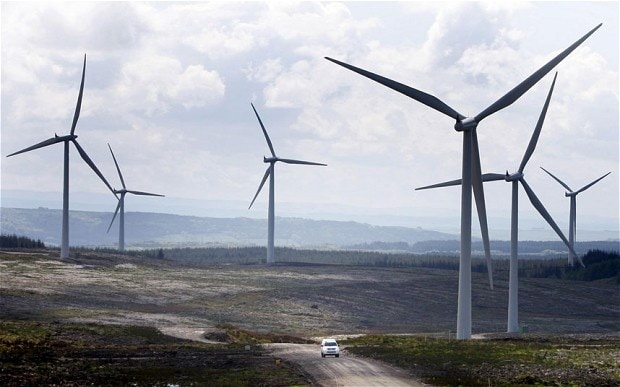
Did Scotland axe 14 million trees to make way for wind farms.
In recent days, hundreds of social media posts have alleged that 14 million trees were chopped down in Scotland to make way for wind farms. “Environmental madness”, one widely shared tweet reads. “Scotland launched a number of wind turbine projects in an obsessive quest to cash in on renewables.
“The real tragedy is the destruction of 14 million trees, the mind-numbing hypocrisy of climate zealots, a hoax created by the UN.” Other posts, meanwhile, suggest the 14 million trees had been cut down “since 2020”.
But that’s not the full story.
According to the government agency Forestry and Land Scotland (FLS), 14 million trees were cut down to make way for wind farms in Scotland, but this had occurred over 20 years.
Meanwhile, over the same period (from 2000), 272 million trees were planted across the country.
That crucial fact is missing from an article published by the website Energy News Beat, which appears to have driven the recent surge in social media activity.
Notably, the omission comes despite the article drawing heavily on a two-year-old story published by Scottish news site The Herald, in which an FLS spokesman was quoted as saying: “That figure for felled trees should also be contrasted with that for the number of trees planted in Scotland over the years 2000 – 2019, a total of 272,000,000, and renewable energy developments fit well with this.”
He added: “The amount of woodland removed across Scotland’s national forests and land, managed by FLS, for wind farm development is not even 1 per cent of the total woodland area”, while the 14 million trees were a commercial crop that would ultimately have been felled for timber.
An FLS spokesman also explained that the 272 million trees planted did not include restock planting on commercial sites. In addition, the Scottish government requires that developers that fell trees to make way for wind farms must carry out compensatory planting elsewhere.
“On average, FLS will plant 25 million trees every year as restock planting of commercial crops,” he said.
So you have it and the debates continue to follow.
COP26 attendees, including Scotland, swore to end deforestation by 2030.
Scotland and all other attendees at the recent COP26 gathering agreed to stop all deforestation efforts by the year 2030. Scotland apparently took this to mean that for the next seven some-odd years, clearcutting entire forests is an acceptable way to “cool” the planet.
“Renewable energy and forests are key to Scotland’s contribution to mitigating climate change and FLS is successfully managing both elements,” claims Forestry and Land Scotland about the issue.
What the FLS spokesman who made these statements failed to address is the fact that once the 21 new wind turbines are erected on the clearcut land, there will be no more room to reforest the area – meaning fewer trees on the Scottish landscape.
Back in 2018, some 6,500 acres of woodland were cleared to make way for wind turbines, prompting accusations that the Scottish forestry chief had “desecrated” the land.
What was previously an unspoiled countryside saw total destruction to make way for just seven wind farms, which are highly unreliable, unsightly, noisy and just plain hideous.
Less than half of that land has been replanted or even earmarked for replanting, despite promises from FLS that everything would be made “green” again once the gargantuan metal monstrosities were installed.
“This has been happening in other parts of Europe for some time,” warned Dr. Benny Peiser, head of the Global Warming Policy Foundation think-tank, concerning the spreading virus of so-called “green” energy.
“People in Scotland are not as aware of it because the forestry is not close to population centres,” he added. “Many of these forms of renewable energy have far greater impact on the environment than simply building a power plant.”
“By building wind farms, they are destroying huge areas of forestry for very little effect and are desecrating large parts of beautiful countryside, which can only damage Scotland as a tourism destination.”
Between 2014 and 2016 in Scotland alone, some ten square miles of forests were clearcut for wind farm developments. What was once an unspoiled bastion of beauty and nature is now a rattling metal wasteland that is supposedly “saving the planet.”
“Nothing more than a scheme, exchanging one green (earth) for another green (cash), and that is all it is about,” wrote a commenter at Natural News about the subject.