
A Turkish Proverb


2,000-year-old seeds were discovered in 1963 inside an ancient jar in Israel. They were planted in 2005 and a tree that had been extinct for over 1800 years sprouted.

Sarah Sallon, a medical doctor who worked at the Hadassah Medical Center in Jerusalem, went looking for medicinal plants in Jerusalem. And she found lots of them. But she also heard about ancient medicinal plants that had disappeared.
“They’re just historical ghosts,” she says. “Like the famous date plantations along the Dead Sea, 2,000 years ago — described by Pliny; described by Josephus, the first-century historian. They’re not there anymore. They just vanished!”
Sallon realized, though, that seeds from those trees still existed. They’d been recovered from archaeological sites. So she went to the archaeologists and proposed planting some of those seeds, to see if they’d grow again. It didn’t go well at first. “They thought I was mad!” she says. “They didn’t think that this was even conceivable.”
But she kept pushing, and eventually persuaded a few of them to provide some seeds to try this with. More than a decade ago, she and Elaine Solowey, a researcher at the Arava Institute of Environmental Studies, planted some of these ancient palm seeds. “Six weeks later, little green shoots appeared!” she says.
One tree grew ~ A male date palm tree named Methuselah, after Noah’s grandfather, the oldest man in the Bible. This palm sprouted from a 2,000-year-old seed nearly a decade ago and is thriving today, according to the Israeli researcher who is cultivating the historic plant.

The plant was sprouted in a laboratory in 2005, and when a National Geographic news story about the event resurfaced this week on the social media website Reddit, we decided to check in on Methuselah and see how it’s doing. “He is a big boy now,” says Elaine Solowey,
“He is over three meters [ten feet] tall, he’s got a few offshoots, he has flowers, and his pollen is good,” she says. “We pollinated a female with his pollen, a wild [modern] female, and yeah, he can make dates.”
In 2005, Solowey, an expert in desert agriculture, germinated the ancient seed, which was recovered decades earlier from an archaeological excavation at Masada, a historic mountainside fortress. The seed had spent years in a researcher’s drawer in Tel Aviv.
In the years since Methuselah first sprouted, Solowey has successfully germinated a handful of other date palms from ancient seeds recovered at archaeological sites around the Dead Sea. “I’m trying to figure out how to plant an ancient date grove,” she says.
To do that, she’ll need to grow a female plant from an ancient seed as a mate for Methuselah. So far, at least two of the other ancient seeds that have sprouted are female.
If Solowey succeeds, she notes, “we would know what kind of dates they ate in those days and what they were like. That would be very exciting.”

In 2012, scientists in Russia were able to grow a plant from 32,000-year-old seeds that had been buried by an Ice Age squirrel in Siberia. (See “32,000-Year-Old Plant Brought Back to Life—Oldest Yet.”)
Genetic tests indicate that Methuselah is most closely related to an ancient variety of date palm from Egypt known as Hayany, which fits with a legend that says dates came to Israel with the children of the Exodus, Solowey says.
“It is pretty clear that Methuselah is a western date from North Africa rather than from Iraq, Iran, Babylon,” she explains. “You can’t confirm a legend, of course.”
In addition to Solowey’s hopes of establishing an orchard of ancient dates, she and colleagues are interested in studying the plants to see if they have any unique medicinal properties.
The other date palms sprouted from ancient seeds look similar to Methuselah; distinguishing characteristics, Solowey says, include a sharp angle between the fronds and spine.
“A lot of people have kind of forgotten about Methuselah,” Solowey says. “He is actually a really pretty tree.”
When Sallon talks about the possibility of eating dates just like the ones that people in the bible ate, her voice fills with wonder and expectation. According to ancient writers, she says, these dates “were known for their wonderful sweetness, their very large size, and their ability to be stored for a long time, so they actually were exported around the Roman empire.”
Now they may live again, which Sallon takes as a sign of hope for the world. She’s written a children’s book about this, telling the story from the date’s point of view, and hopes to get it published soon.
Historically
In1963, archaeologists began a dig around King Herod the Great’s palace at the ancient fortress of Masada. The ruins sit atop a jutting plateau of rock in Southern Israel, which overlooks the Judaean Desert to one side and the Dead Sea to the other. It’s naturally fortified by steep cliffs rising some 1,300 feet. About 100 miles north lay the Jordan Valley, with its forests of 40-foot date palms, a medicinal fruit tree that symbolized life and prosperity.
In order to feed hundreds of subjects, Herod had dates and other delicacies shipped to the remote mountaintop — peaches, figs, olives, almonds, wine, and birds for meat, according to Roman historian Flavius Josephus. Then in 73 CE, the Romans attacked the fortress. The siege lasted a full year, during which time the Jews subsisted on what jarred food remained. Ultimately, rather than surrender, they set fire to Herod’s citadel and committed mass suicide. Most of the buildings were left to decay — along with a few tiny seeds that waited inside their warm jar.

Two thousand years later, excavators discovered that curious clay jar buried deep in hot, dry dirt. It was undisturbed and intact. Inside they found several date palm seeds. Back at the lab, scientists broke off tiny chips of the seeds’ shells; carbon dating estimated their origin between 155 BC and 64 CE.
Both the Bible and the Koran praise the date palm. The tree provided shade, food, and medicine. In the “land of milk and honey,” dates were the honey. The fruit was large, dark, and very sweet, says Solowey. It had good “shelf life” and was in high demand in Rome.
“Roman emperors wanted Judean dates for their tables,” Solowey told Timeline. “Since they had absolutely nothing else good to say about Jews, Judea, or Judaism, I assume they were very good dates.”

The ancient fruit made tonics for longevity, laxatives, and aphrodisiacs; lore claims they could cure infections. The date was so important to the region that it featured on ancient coinage, and even on Israel’s 10-shekel coin today. But 800 years ago, crusaders destroyed the last Judean palm and rendered the plant extinct. Dr. Sallon hopes Methuselah is the key to medicinal remedies once lost to history.
“Within a 2,000-year-old seed, a germ of life was still alive,” wrote Jane Goodall in her 2013 book Seeds of Hope, “waiting, waiting, waiting for the right conditions to wake, like Rip Van Winkle, into a strange and different world.”
https://timeline.com/methuselah-judean-date-palm-b3782ff1d731

Did Scotland axe 14 million trees to make way for wind farms.
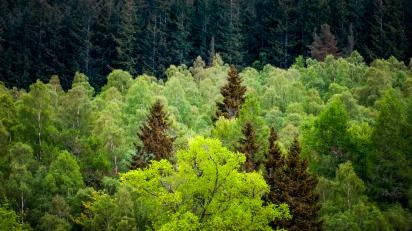
In recent days, hundreds of social media posts have alleged that 14 million trees were chopped down in Scotland to make way for wind farms. “Environmental madness”, one widely shared tweet reads. “Scotland launched a number of wind turbine projects in an obsessive quest to cash in on renewables.
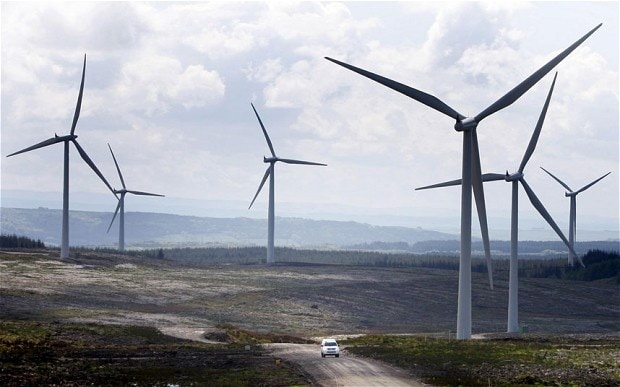
“The real tragedy is the destruction of 14 million trees, the mind-numbing hypocrisy of climate zealots, a hoax created by the UN.” Other posts, meanwhile, suggest the 14 million trees had been cut down “since 2020”.

But that’s not the full story.
According to the government agency Forestry and Land Scotland (FLS), 14 million trees were cut down to make way for wind farms in Scotland, but this had occurred over 20 years.
Meanwhile, over the same period (from 2000), 272 million trees were planted across the country.
That crucial fact is missing from an article published by the website Energy News Beat, which appears to have driven the recent surge in social media activity.
Notably, the omission comes despite the article drawing heavily on a two-year-old story published by Scottish news site The Herald, in which an FLS spokesman was quoted as saying: “That figure for felled trees should also be contrasted with that for the number of trees planted in Scotland over the years 2000 – 2019, a total of 272,000,000, and renewable energy developments fit well with this.”
He added: “The amount of woodland removed across Scotland’s national forests and land, managed by FLS, for wind farm development is not even 1 per cent of the total woodland area”, while the 14 million trees were a commercial crop that would ultimately have been felled for timber.
An FLS spokesman also explained that the 272 million trees planted did not include restock planting on commercial sites. In addition, the Scottish government requires that developers that fell trees to make way for wind farms must carry out compensatory planting elsewhere.
“On average, FLS will plant 25 million trees every year as restock planting of commercial crops,” he said.
So you have it and the debates continue to follow.
COP26 attendees, including Scotland, swore to end deforestation by 2030.
Scotland and all other attendees at the recent COP26 gathering agreed to stop all deforestation efforts by the year 2030. Scotland apparently took this to mean that for the next seven some-odd years, clearcutting entire forests is an acceptable way to “cool” the planet.
“Renewable energy and forests are key to Scotland’s contribution to mitigating climate change and FLS is successfully managing both elements,” claims Forestry and Land Scotland about the issue.
What the FLS spokesman who made these statements failed to address is the fact that once the 21 new wind turbines are erected on the clearcut land, there will be no more room to reforest the area – meaning fewer trees on the Scottish landscape.
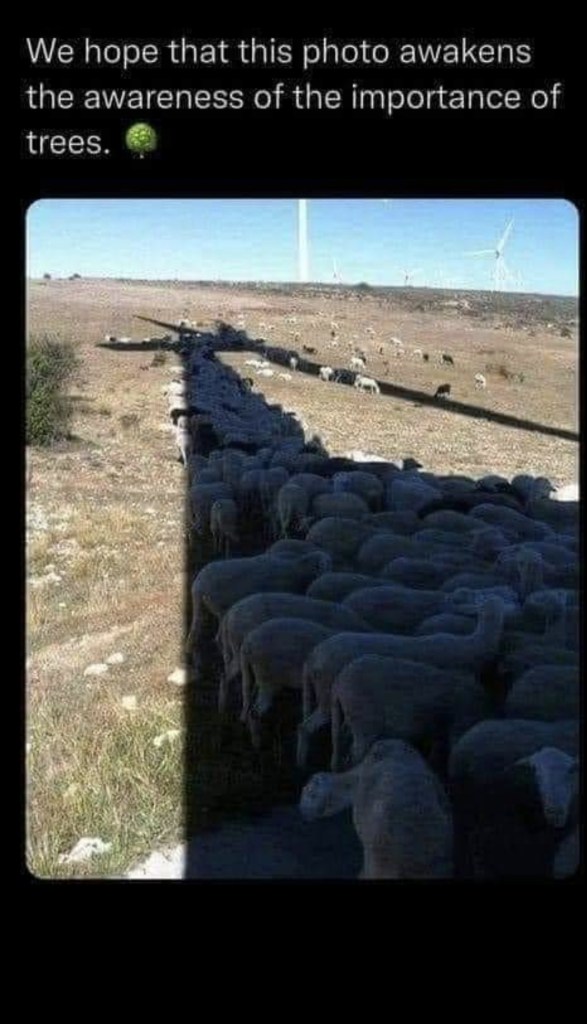
Back in 2018, some 6,500 acres of woodland were cleared to make way for wind turbines, prompting accusations that the Scottish forestry chief had “desecrated” the land.
What was previously an unspoiled countryside saw total destruction to make way for just seven wind farms, which are highly unreliable, unsightly, noisy and just plain hideous.
Less than half of that land has been replanted or even earmarked for replanting, despite promises from FLS that everything would be made “green” again once the gargantuan metal monstrosities were installed.
“This has been happening in other parts of Europe for some time,” warned Dr. Benny Peiser, head of the Global Warming Policy Foundation think-tank, concerning the spreading virus of so-called “green” energy.
“People in Scotland are not as aware of it because the forestry is not close to population centres,” he added. “Many of these forms of renewable energy have far greater impact on the environment than simply building a power plant.”
“By building wind farms, they are destroying huge areas of forestry for very little effect and are desecrating large parts of beautiful countryside, which can only damage Scotland as a tourism destination.”
Between 2014 and 2016 in Scotland alone, some ten square miles of forests were clearcut for wind farm developments. What was once an unspoiled bastion of beauty and nature is now a rattling metal wasteland that is supposedly “saving the planet.”
“Nothing more than a scheme, exchanging one green (earth) for another green (cash), and that is all it is about,” wrote a commenter at Natural News about the subject.
Reference ~https://energysupply.news/2022-08-15-scotland-cuts-down-14million-trees-wind-farms.html

 Tree Weaver